Hip Hop Hub Network
Hip Hop Hub Network: Welcome to the ultimate destination for hip hop artists, producers, and enthusiasts! Join our vibrant community to connect, collaborate, and elevate your craft. Whether you're looking to showcase your music, learn new skills, or network with industry professionals, the Hip Hop Hub Network has something for everyone. Get involved in events, workshops, and discussions that celebrate the culture and creativity of hip hop!
Powered by


This has been a peculiar year for hip-hop.
On one hand, members of hip-hop’s “Big Three” have continued to command attention, while Jay-Z’s legacy has remained a major force in the culture. The genre still holds enormous global influence, even as certain commercial indicators suggest its momentum is shifting.
On the other hand, the music industry appears to be pulling back on its investment in Black music. Rap has struggled to maintain its usual presence near the top of the mainstream charts, leaving fans and industry insiders asking a difficult question: Where is the next generation of superstars?
The question becomes even more pressing as major-label restructurings continue to affect the executives, creatives, and decision-makers who have helped shape Black music for decades.
The entertainment industry is changing, and hip-hop is not immune. Companies are cutting costs, consolidating operations, and looking for more predictable returns. Unfortunately, creativity doesn't always fit neatly into a spreadsheet.
So, where do we go from here?
I believe the answer lies in a model that helped build hip-hop long before it became a multibillion-dollar global business.
The boutique independent label.
By boutique, I mean an independent label with a focused, intentional roster. It's a company built around a clear identity, a hands-on approach to artist development, and executives who understand their artists' visions, strengths, weaknesses, and long-term potential.
These labels often partner with major companies to expand their reach. But the key is that they build something worth expanding before that partnership happens.
Look at the history of hip-hop.
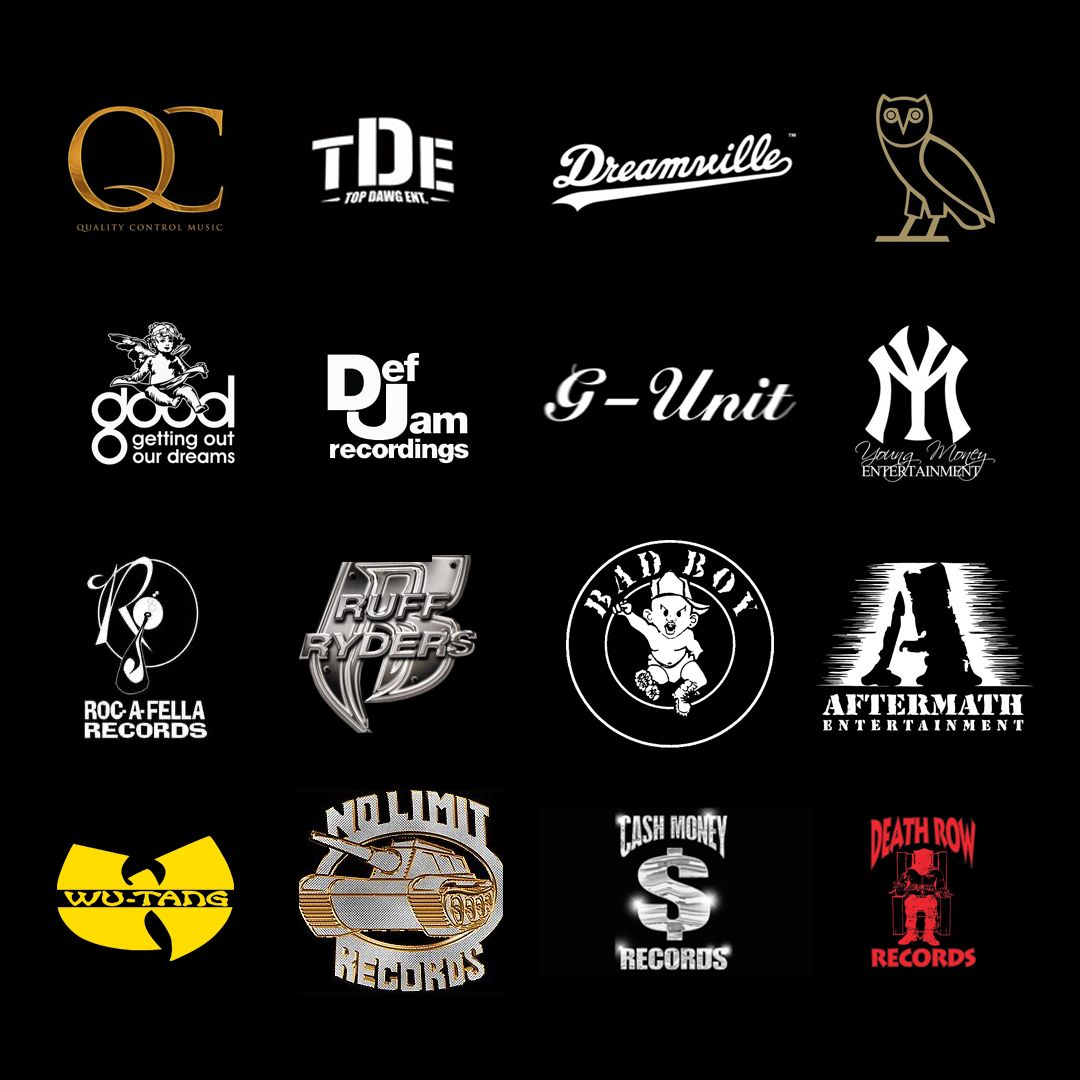
Cash Money. Roc-A-Fella. Aftermath. Top Dawg Entertainment. Dreamville. Quality Control.
These imprints helped develop artists, create recognizable movements, and establish brands that extended far beyond individual records. They gave fans something to believe in, not just another song to stream.
The independent label wasn't simply a stepping stone. It was the foundation.
And in many cases, the freedom to develop outside the traditional major-label system gave artists room to become the stars the industry eventually couldn't ignore.
Across music, marketing, and entertainment, creatively led businesses are proving the value of having a clear vision and the flexibility to execute it. Hip-hop once thrived on that very principle.
Maybe it's time to return to it.
PART I: HOW DID WE GET HERE?
The recorded-music business continues to generate billions of dollars annually. Yet, despite that economic power, the industry is increasingly shaped by consolidation, catalog acquisitions, corporate restructuring, and the pursuit of predictable revenue.
Music has become an asset class. Catalogs are bought and sold, intellectual property is packaged for investors, and companies are under constant pressure to demonstrate growth.
None of that is inherently bad. Artists deserve to make money, and businesses need to be profitable.
The problem begins when the systems designed to protect profitability start limiting the creativity that makes the business valuable in the first place.
To understand where hip-hop goes next, we need to examine two forces that have reshaped the industry: standardized systems and shareholder priorities.
I. The Systems That Crush Innovation
Systems are essential to running a successful business. They create repeatable processes, make operations easier to manage, and allow companies to scale.
Think about McDonald's. The company has spent decades refining its operations, from food preparation and staffing to locations and customer service. Consistency is part of the business model.
But here's the problem: what works for a standardized product doesn't necessarily work for an artist.
Creativity is personal. Every artist has a different story, sound, personality, audience, and vision. What makes one artist special may be completely wrong for another.
Of course, artists need structure. They need strong management, marketing, distribution, radio relationships, touring opportunities, and a team that understands how to turn talent into a sustainable career.
But there's a difference between building a system that supports creativity and forcing creativity to fit a system.
Too often, the industry seems to favor familiar formulas over original ideas. Artists are encouraged to chase the same sounds, revisit the same nostalgic samples, follow the same social-media trends, and manufacture viral moments in the hope of producing predictable results.
TikTok can help break an artist. A familiar sample can introduce a new generation to an old classic. There's nothing wrong with either approach.
The problem comes when those tactics become the entire strategy.
When every artist is chasing the same moment, the music starts sounding interchangeable. When executives prioritize immediate engagement over long-term identity, artists can become popular before they've figured out who they are.
Virality can create attention. It doesn't automatically create longevity.
Hip-hop needs more than a reliable formula for producing a hit. It needs an environment where artists can take risks, develop their voices, and build careers that survive beyond a trending sound.
That's where independent labels can make a difference.
II. Shareholders vs. Consumers
One of the biggest advantages of a boutique label is flexibility.
A smaller, creatively driven company can focus on an artist's relationship with the audience instead of measuring every decision against the expectations of a large corporate organization.
The objective is still to make money. Nobody is suggesting that independent labels should ignore the business side of music.
But the strongest independent labels understand that the business works best when the music, the artist's identity, and the audience connection come first.
A loyal fan base can support an artist for years. A viral moment might last a weekend.
Large corporations face a different set of pressures. Publicly traded companies have responsibilities to shareholders, and businesses backed by institutional investors are often expected to deliver measurable returns.
Those pressures can influence everything from staffing and marketing budgets to the amount of time an artist receives to develop.
When short-term performance becomes the priority, long-term development can start looking like an unnecessary expense.
Artist development takes time. Building a movement takes time. Finding the right sound, refining an image, learning how to perform, and establishing a genuine relationship with fans can take years.
Those investments may not produce immediate returns, but they can create lasting value.
The danger is that when companies focus too heavily on cutting costs and maximizing short-term results, they risk weakening the very creative pipeline that produces their future stars.
Hip-hop doesn't have a talent problem. It has a development problem.
And that distinction matters.
PART II: WHERE DO WE GO FROM HERE?
Hip-hop has never been a simple copy of mainstream pop music.
You can't always hand an artist a sound, an image, a marketing plan, and a few catchy records and expect to create a lasting cultural figure.
It might work for a moment. But hip-hop audiences have a long history of rewarding authenticity, originality, and artists who represent something bigger than a promotional campaign.
Fans want to discover movements. They want to feel connected to an artist's journey. They want to know the story behind the music.
That's why I believe the next era of hip-hop will be shaped by independent labels and artist-led imprints that function as talent incubators.
These companies can develop the talent, build the identity, establish the audience, and then partner with major labels when additional resources can make a meaningful difference.
The model works because independent imprints can offer two things that are increasingly difficult to maintain at scale: focus and artist development.
I. Build a Focused, Intentional Brand
In discussing Dreamville's partnership with Interscope, J. Cole explained the value of bringing the creative direction, music, and vision to a partnership while allowing the major label to provide additional resources and reach.
That principle captures the opportunity for independent labels.
The goal isn't to prove that major labels are unnecessary. It's to build something strong enough that a major label becomes a strategic partner rather than the sole source of direction.
A successful imprint needs a recognizable identity. Fans should understand what a label represents and why its artists belong together.
That identity might come from a shared musical philosophy, a geographic connection, a visual aesthetic, a cultural perspective, or simply the taste of the people running the operation.
Whatever the foundation, it needs to be authentic and consistent.
Dreamville offers a useful example. The label developed a recognizable creative identity around J. Cole and a roster of artists whose music, collaborations, and public image reinforced the larger brand.
Fans weren't just following individual artists. They were following the movement surrounding them.
That kind of loyalty is powerful because it gives audiences a reason to pay attention to the next release, the next signing, and the next chapter in the label's story.
Independent labels should think about their brands the same way successful businesses think about their products: What makes us different? Who are we speaking to? Why should people care?
The answers shouldn't come from chasing whatever is popular this month. They should come from understanding the culture and having a clear point of view.
A strong brand gives artists a platform. A strong roster gives that brand a future.
II. Artist Development Is Still the Difference
For years, music-industry professionals have raised concerns about the decline of traditional artist development, particularly within parts of the mainstream urban-music business.
The effects can be seen when artists achieve enormous online attention but struggle to translate that popularity into a compelling live performance or a sustainable career.
A viral record can put an artist on a festival stage before they've had the opportunity to build the experience needed to command it.
Stage presence, breath control, audience engagement, song selection, visual identity, and the ability to perform consistently are skills that require practice.
So does learning how to make a complete project rather than a collection of disconnected singles.
None of these abilities develops overnight.
Artist development is the process of turning potential into a professional, well-rounded performer with a clear identity and a lasting relationship with an audience.
And it requires people who are willing to invest time, provide honest feedback, and help an artist grow.
Top Dawg Entertainment is an important example of this approach.
Through the development of artists including Jay Rock, Ab-Soul, ScHoolboy Q, and Kendrick Lamar, TDE established a recognizable identity and built a roster that helped shape modern hip-hop.
Their success wasn't simply about finding talented rappers. It was about developing complementary artists, building a shared creative environment, and allowing individual careers to grow within a larger movement.
The relationships, collaborations, performances, and years of work behind the scenes helped establish a foundation that fans could recognize.
That's what makes a strong imprint different from a collection of unrelated artists.
The label becomes a place where talent can develop, artists can learn from one another, and the next generation can benefit from the experience of those who came before them.
This is especially important for emerging artists who haven't yet figured out their sound, audience, or direction.
Instead of demanding that every release become a hit, an effective development team can identify what makes an artist different and build a strategy around it.
Sometimes that means refining the music. Sometimes it means changing the production, improving live performances, developing a stronger visual identity, or helping an artist understand which audience genuinely connects with their work.
The process isn't always glamorous. It requires patience, investment, and the willingness to make decisions that might not pay off immediately.
But when it works, the results can last for decades.
III. Build the Movement Before Chasing the Deal
There's another advantage to the independent-label model: it encourages artists to build leverage.
An artist who already has a recognizable identity, an engaged audience, a consistent release strategy, and a compelling live show is in a stronger position to negotiate a partnership.
Instead of asking a major label to discover their potential, they can demonstrate what they've already built.
That doesn't mean every independent artist needs a record deal. Some will thrive independently, while others will benefit from the resources, distribution, marketing power, and international relationships a major can provide.
The point is that the partnership should serve the vision.
Independent labels can establish the foundation. Major labels can help expand the opportunity when the timing and terms make sense.
But the foundation has to be real.
A million views without a lasting audience isn't necessarily a business. A trending song without a clear identity isn't necessarily a career. And a roster of artists without a shared vision isn't necessarily a movement.
The most successful imprints understand that development, branding, and audience relationships are connected.
They aren't just releasing music. They're building something people want to be part of.
That's the opportunity for the next generation of independent labels.
WHERE DO WE GO FROM HERE?
Nobody can predict exactly how the latest industry restructurings will affect hip-hop in 2027 and beyond. Investment priorities will change, new platforms will emerge, and the mainstream charts will continue to reflect shifting listener habits.
Hip-hop may face more competition from country, global music, and other genres for mainstream attention. Its chart performance may fluctuate, and the traditional pathways to stardom may continue to evolve.
But hip-hop will be fine.
The culture has never depended entirely on corporate approval.
It grew from communities, block parties, independent radio, mixtapes, local venues, neighborhood studios, and artists who created something because they had a story to tell.
Before the major contracts, the streaming numbers, and the corporate partnerships, there were people building movements with limited resources and unlimited ambition.
That spirit hasn't disappeared. It may simply need more room to breathe.
A renewed focus on independent labels could help restore some balance to the industry. It could create more opportunities for emerging artists, encourage greater creative diversity, and give experienced music executives the freedom to develop talent without forcing every decision into a standardized corporate formula.
It could also remind the industry of something easy to forget: culture is created by people living real lives. Their experiences, struggles, ideas, and creativity cannot always be measured in a spreadsheet or predicted by an algorithm.
The next superstar might be working out of a small studio in Brooklyn, building a following in Atlanta, recording in a home studio in Chicago, or performing at local venues in a city the industry rarely pays attention to.
They might not have a major-label deal. They might not have a viral hit. They might not even have a team yet.
But with the right development, the right vision, and the right people around them, they could become the artist everyone is talking about tomorrow.
The opportunity is there. The talent is there.
Now the industry needs to give that talent room to grow.
The next superstar doesn't need to come from a major label. They need to come from somewhere that believes in them before everybody else does.
Let the independents build. Let the artists develop. Let the culture lead.
The next movement might already be underway.
Let's check back in '27.
One.
Related Blogs
View All